Science & Technology Centre
Triple Science
Chemistry is the scientific study of the properties, composition, structure and behavior of substances (matter). It is a natural science that covers elements, atoms, molecules and ions. There is a subdiscipline within chemistry, organic chemistry which studies organic materials, i.e., matter in its various forms that contain carbon atoms. There is also another branch that focuses on substances that do not contain carbon and that subdiscipline is called inorganic chemistry.
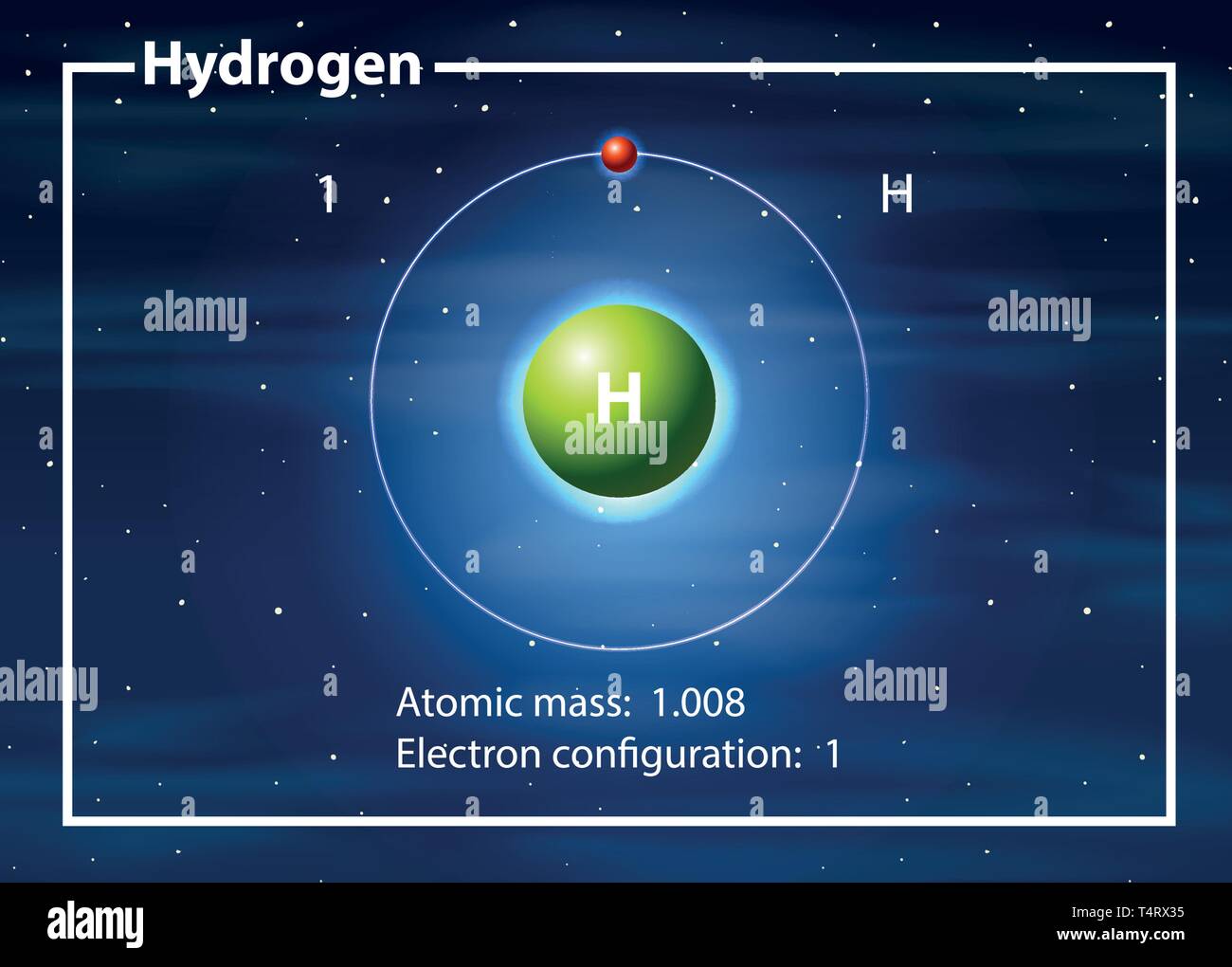 |
| Hydrogen( H ): 1 proton + 1 electron |
Atoms are the smallest indivisible particle of matter, 'i.e. something that cannot be divided'. They are the basic building blocks of matter. An atom consists of a central nucleus that is surrounded by one or more negatively charged electrons. The nucleus contains one or more relatively heavy particles known as protons and neutrons. The simplest atom is the hydrogen atom which has only one electron circling its nucleus. ( n.b. protons, electrons and neutrons are called subatomic particles because together they make up an atom).
An element consists of all atoms that have the same number of protons in their nuclei. Usually the number of protons in the nucleus is the same as the number of neutrons in the same nucleus but this is not always the case. An isotope is a variation of the same element with a different number of neutrons in their nucleus.
Here is a list of the first ten elements found in the periodic table of elements which must be committed to memory. 1 Hydrogen (H), 2 Helium (He), 3 Lithium (Li), 4 Beryllium (Be), 5 Boron (B), 6 Carbon(C), 7 Nitrogen (N), 8 Oxygen (O), 9 Fluorine (F), 10 Neon (Ne). The numbers are atomic numbers of the elements. It is a list that describes the arrangement of elements in order of their increasing automic number. There are 118 known elements that make up the periodic table today. Metals are good conductors of both electricity and heat.
A molecule is a group of two or more atoms held together by attractive forces known as chemical bonds
Electropositive and Electronegative Elements
Elements (other than hydrogen) that display a greater tendency to lose electrons to their solution are categorized as electropositive. Similarly, elements that acquire electrons are said to be electronegative.
Study these two clips about atoms and molecules before attempting the quiz at bottom of this page.
Test your basic knowledge level of Chemistry 1 and record your initial score in your notebook.
Test your basic knowledge level of Chemistry 2 and record your initial score in your notebook.
Test your basic knowledge level of Chemistry 3 and record your initial score in your notebook.